
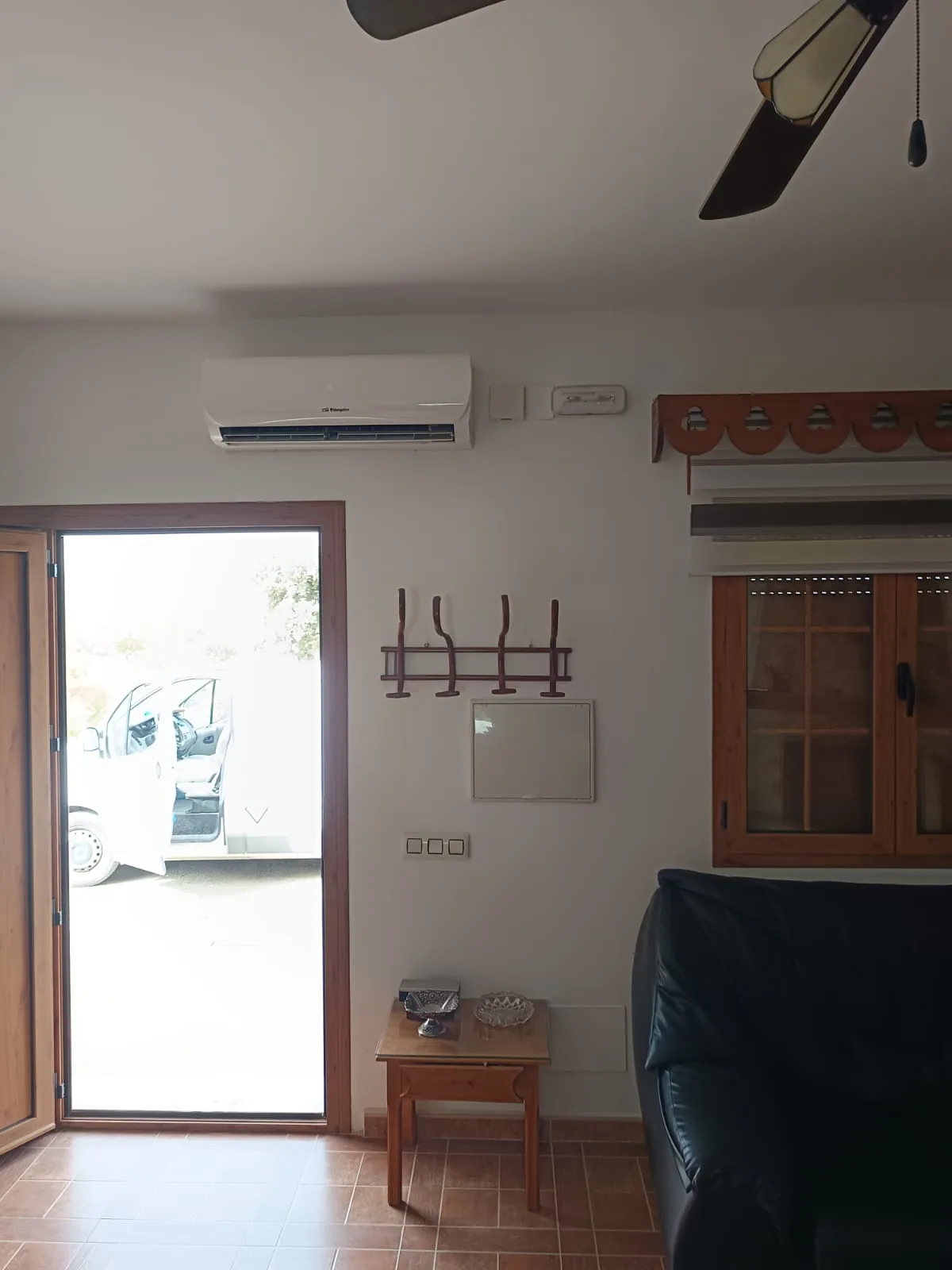
There’s a stretch in July when the house doesn’t cool down overnight. Shutters down before ten, everything opened up again after dark, and by mid-afternoon the sitting room is holding the heat anyway, as though it’s been saving it for later. You end up wandering from room to room looking for the one that gives in first, and there isn’t one.
That’s usually when the phone rings here. And the conversation hardly ever starts with a brand. It starts with the house.
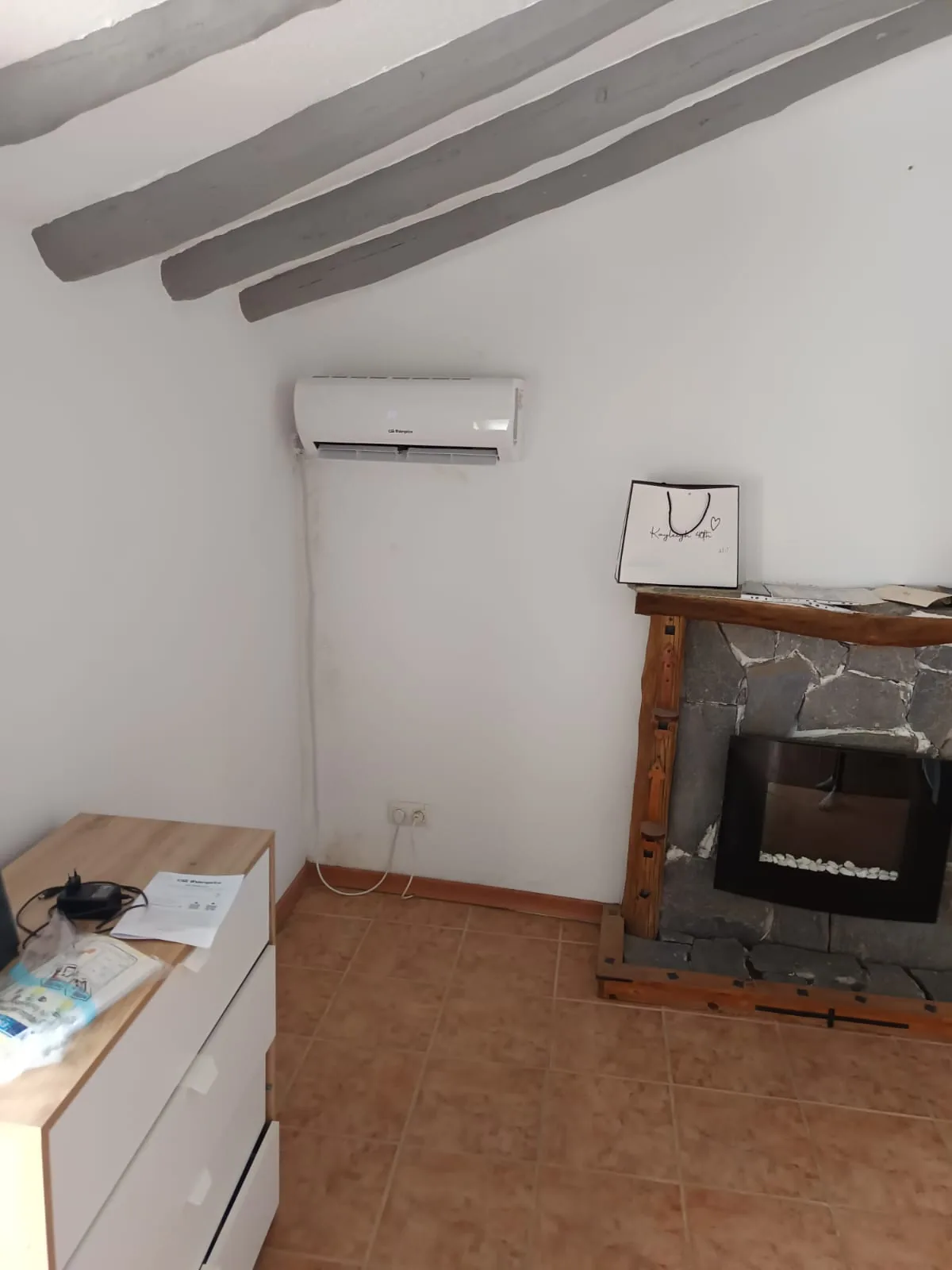
We’ve been fitting air conditioning in houses around the valley over the past few weeks and taking photos as we went. They’re our own jobs, not brochure shots, and they’re worth showing — partly so you can see how this looks in a house like yours, and partly because of what sits underneath the tidy finished picture.
There’s another question that tends to turn up once you’ve been here a couple of years. Not which unit to buy. Not even what it costs. It’s this: when it’s October and something isn’t right, who picks up the phone?
No two houses here are built the same
Put the photos side by side and the first thing you notice is how different the properties are in this corner of Almería. A restored farmhouse out in the campo — the countryside, as everyone here calls it — is a different job from a terraced house in the village, and both are different again from a newer villa nearer the coast.
Out in the campo you often get exposed wooden beams in the sitting room, and nobody touches those — they’re half the character of the building. So we look for a clean stretch of wall where the indoor unit can sit without fighting the ceiling, where the air sweeps the length of the room rather than into a beam, and where the run out to the exterior is as short as we can keep it.
A house in a pueblo — a village — brings its own set of questions. There’s usually no garden and nothing round the side, so the outdoor unit goes on the front, facing the street. What matters then is clear air in front of the machine so it can breathe, somewhere a person can actually reach it the day it needs cleaning or checking, and a sensible route for the pipe so the façade stays tidy.
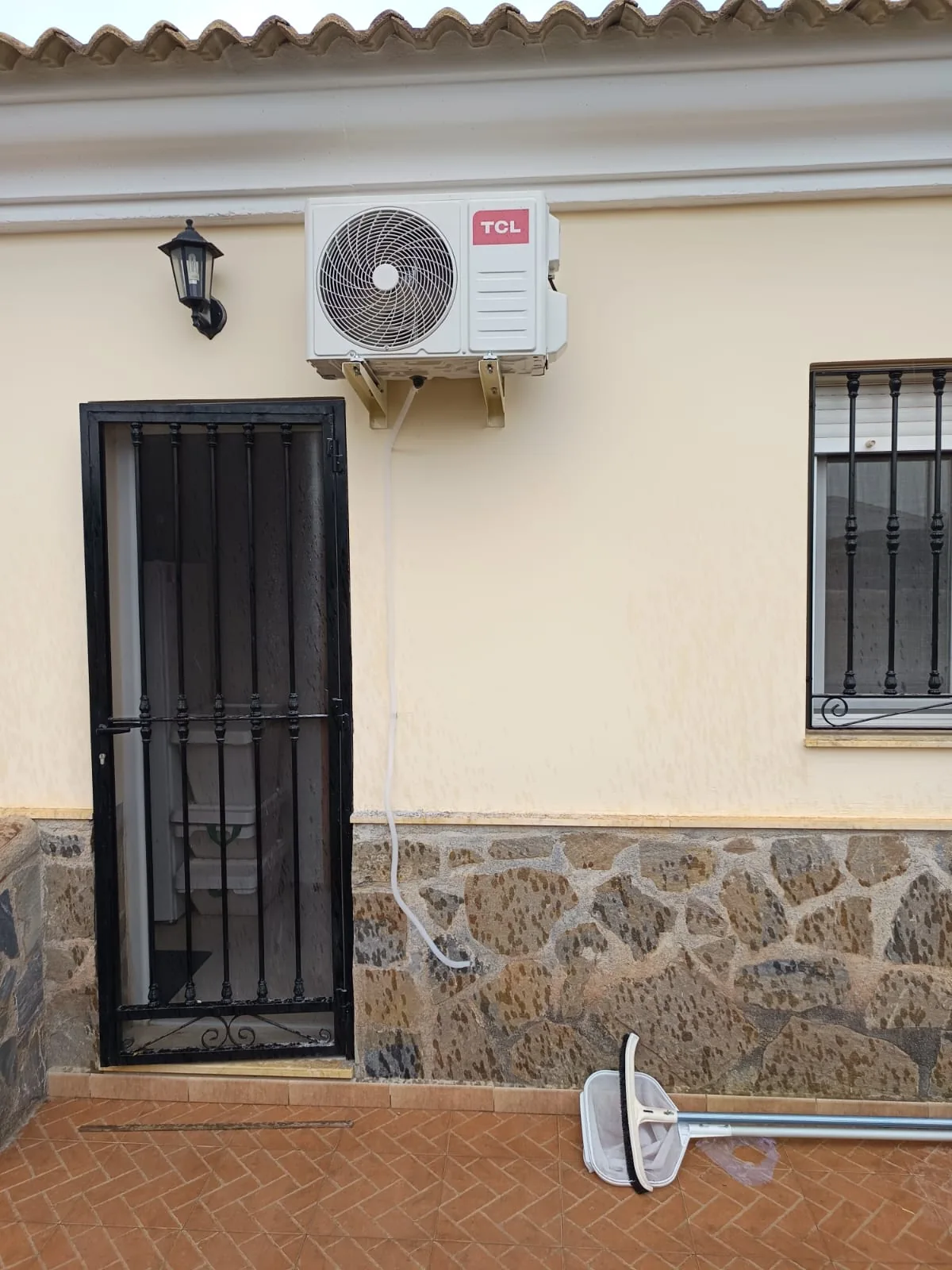
None of that gets settled over the phone. It’s why we come and look first: we quote at the house — a presupuesto, as you’ll hear it called — free and with no obligation, walking the rooms with you, agreeing where each unit goes, and giving you a fixed price with nothing added on afterwards.
The hours you don’t see
Once a job’s done, every installation photo looks much the same: a white unit on a wall and a cool room. The real work is in the middle. It takes hours, and almost nobody sees it.
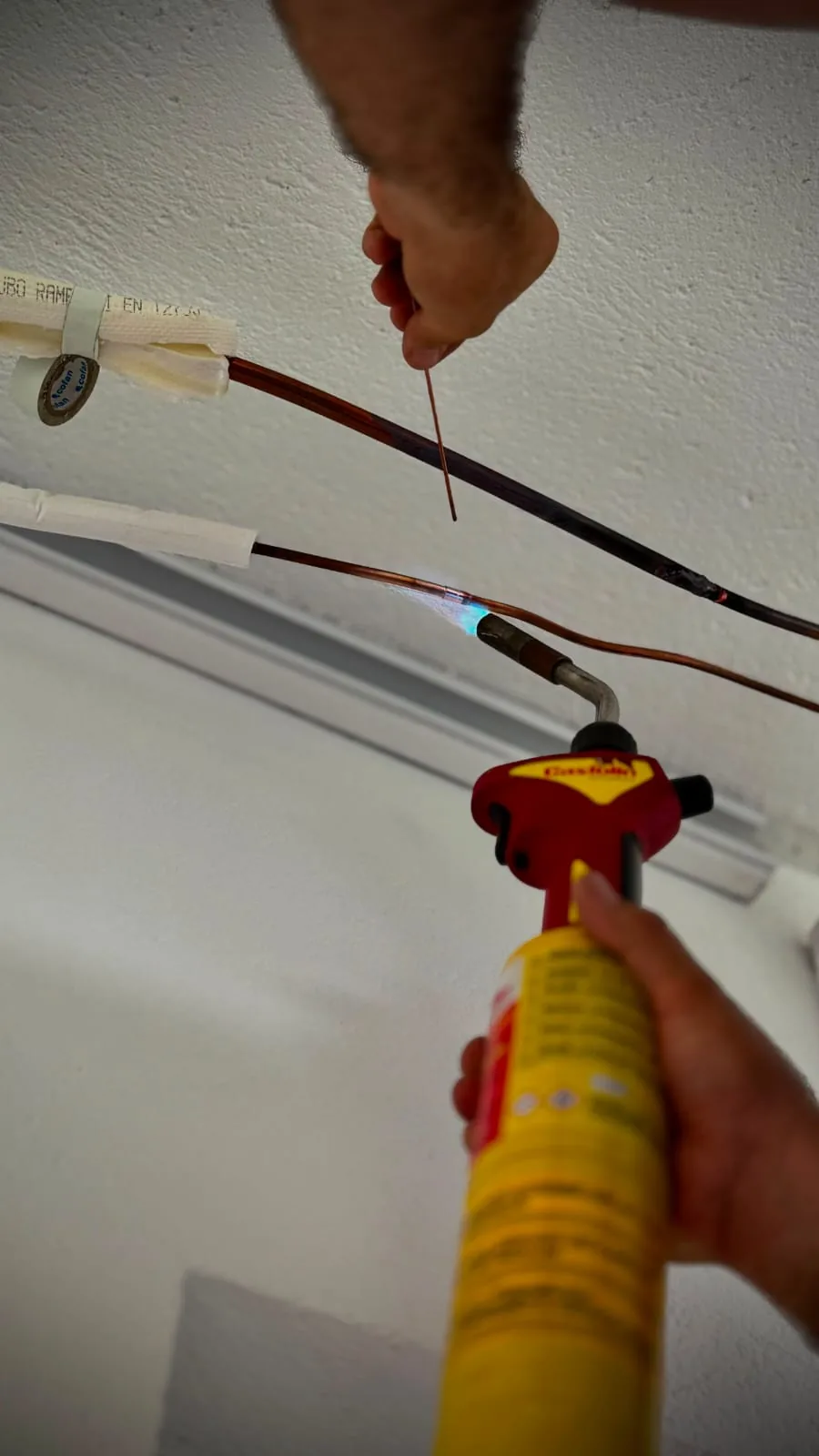
That’s the copper pipework brazed joint by joint, insulation along the whole run rather than just the visible bits, and the condensate drain set with a proper fall on it so the water goes where it’s meant to go. Then, before any gas is opened, the system goes under vacuum: a pump draws out the air and the moisture sitting inside the pipe. You can’t see it or hear it, and it’s done every time, because moisture left in the circuit makes the machine work harder over time. Last comes the charge, adjusted to the length of pipe that house actually needed, not to whatever came in the box.
Those hours are what decide whether the unit works the way it should. It’s why we do it with our own van and our own technician holding a RITE card — the official Spanish qualification for handling refrigerant gases — with nobody subcontracted in between. Put simply: the person doing the brazing is the person who answers the phone later.
And we don’t turn the house upside down. The technician comes in, fits it, tests it, clears up and goes.
One unit, two, or whatever the house needs
We fit wall splits, and multisplit systems when several rooms need doing off one outdoor unit. We also fit floor-to-ceiling consoles for rooms where there’s nothing usable up high — a low beamed ceiling, a wall of windows onto the terrace, or the only free wall being the one you sit looking at. They sit low, push the air along the floor and up, and they sort out rooms a wall split simply can’t.
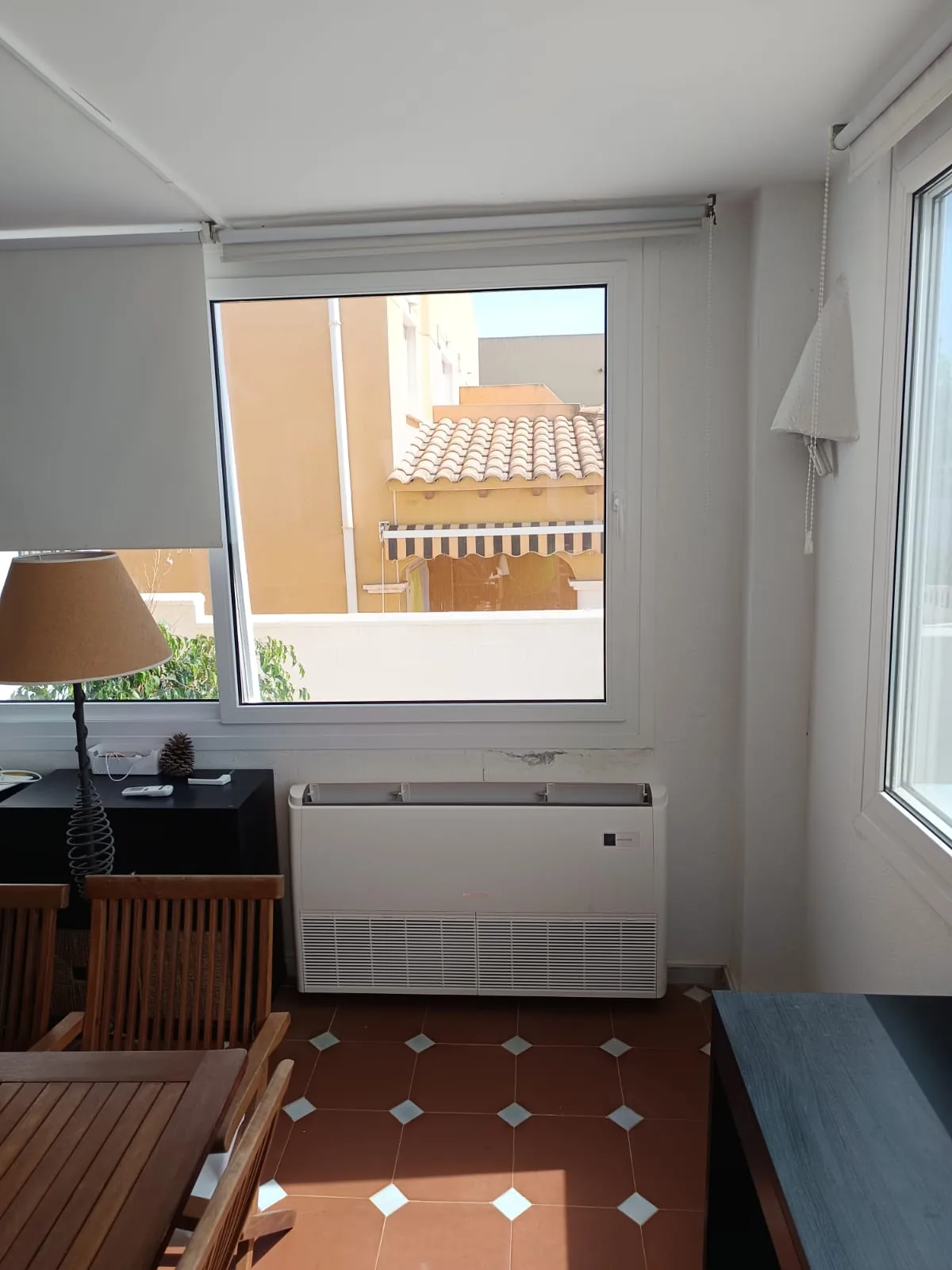
And we replace older equipment that’s stopped earning its keep.
On brands we’re not tied to one. Mitsubishi Electric, Daikin, Fujitsu, Haier, Samsung, LG, TCL, Beko, Orbegozo, Infiniton, Daitsu — the conversation starts with what your house needs, not with a badge we happen to be pushing.
So, who comes back in October?
Here’s the dull answer, and dull is rather the point: we do.
We’re a family business in Albox, trading since 1923, fourth generation. There’s a shop, open by appointment, and an address you can walk into. The legal warranty in Spain runs to three years on manufacturing faults, which is worth knowing if you’ve arrived from the UK, Ireland or further north. We’re an official distributor, so the equipment comes with the official warranty behind it, and the fitting is signed off in-house.
We keep the area deliberately tight — the Almanzora valley, Los Vélez and the Levante coast of Almería: Albox, Arboleas, Zurgena, Cantoria, Huércal-Overa, Vera, Mojácar, Vélez-Rubio and the villages around them. Small enough that we can look after a house on fitting day and again the year after. The people who’ve lived here all their lives ask us exactly the same things as the ones who arrived last spring, and the answer’s the same for both: we work in Spanish, English and French, without making a thing of it. There’s more on how we work village by village on the Arboleas and Albox pages.
What we won’t do is promise you a fitting date in a blog post — availability depends on the week we’re in. What’s real is that you choose the day and the preferred slot that suits you, morning or afternoon, and we confirm the day within 24 hours.
If your house looks like any of these
Before anything else, spend two minutes on sizing. An undersized unit won’t cool the room however good it is, and an oversized one costs more to run than it should; with the room’s dimensions and which way it faces, you’ll have a figure in a moment.
So: work out the capacity your room needs, have a look at the air conditioning in the shop, and when you’ve a rough idea, book your installation visit. We come to the house, take a proper look and quote you with no obligation. If it suits you, we’re here.